Loading...
Serving Springfield, MA and surrounding areas. (413) 334-1135
Serving Springfield, MA and surrounding areas. (413) 334-1135
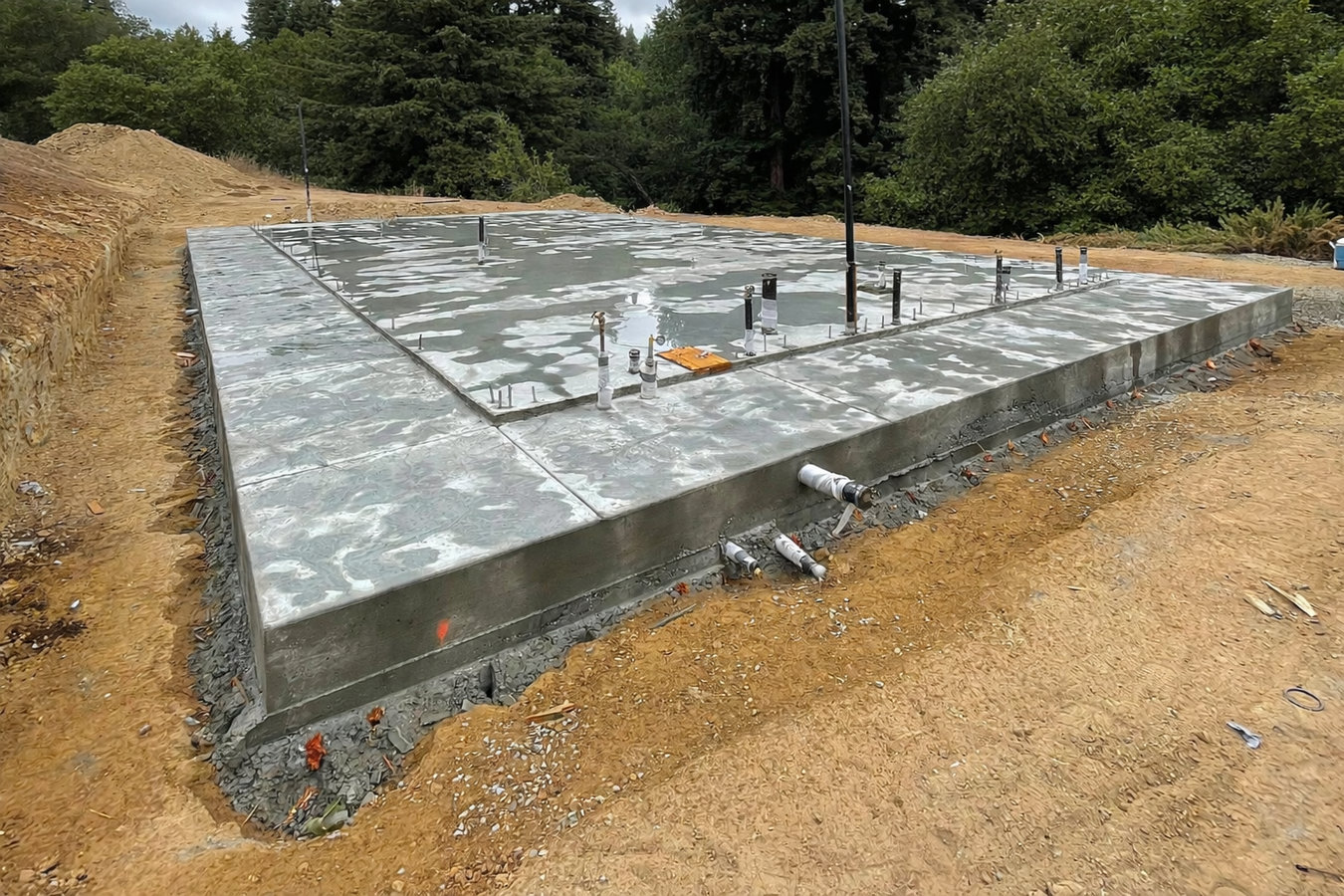
A slab foundation that shifts or cracks in Springfield winters will cost far more to fix than to build right the first time. We handle frost-line footings, permit applications, and city inspections on every project.
Slab foundation building in Springfield means pouring a reinforced concrete base with footings that reach below the 48-inch frost line required by Massachusetts building code. Most residential projects, from first call to a slab ready for framing, take two to four weeks including the permit process. Precision Springfield Concrete Company handles soil assessment, base preparation, moisture barrier installation, the pour, and all required city inspections.
If you are starting a new construction project in Springfield, everything above the slab depends on the slab being done right. The difference between a stable foundation and one that shifts over time comes down to footing depth, base preparation, and drainage. Springfield's clay-heavy soil and hard winters make each of those details matter more here than in warmer or sandier parts of the country. If your project includes a new garage or living-space conversion, we can also coordinate foundation installation for structures that need more than a simple slab.
Springfield homeowners building additions, garages, and new construction have one construction season that runs roughly from late April through October. Reaching out early means you get a real written estimate before the spring rush fills contractors' schedules, and your project starts when you plan it to.
If you are planning new construction in Springfield, a slab foundation is the literal starting point. Without a properly built foundation, no other phase of construction can begin. Getting the design and permitting right before breaking ground saves you from delays and costly corrections later.
Hairline cracks are normal, but cracks wide enough to see clearly from standing height, or any spot where one section has shifted higher than another, mean the slab has moved. In Springfield, the freeze-thaw cycle each winter is a common cause of this, especially in slabs built without deep enough footings.
When a slab foundation shifts, the frame of the house above shifts too. Doors that now drag on the floor or windows with visible gaps at the corners are often early signals that the foundation is settling unevenly. Catching this before the problem spreads is almost always less expensive than addressing it after significant movement has occurred.
Garage slabs are often thinner and less reinforced than slabs designed for occupied, heated space. Many Springfield homeowners converting detached garages into home offices or in-law suites find their existing slab does not meet the requirements. A contractor can assess whether what is there is adequate or whether a new pour is needed before you invest in the rest of the conversion.
Every slab foundation project we take on starts with an on-site assessment of the lot, soil conditions, and the structure's planned load. We then pull the building permit with the City of Springfield's Inspectional Services Division, excavate to below the frost line for the perimeter footings, compact the sub-base, lay gravel and a moisture barrier, place rebar or welded wire mesh reinforcement, and pour the slab. We cut control joints before the concrete fully hardens to give it a planned place to flex rather than crack at random. The city inspection is scheduled and coordinated by us.
For homeowners who need more than a slab, we also handle foundation installation for full basement and crawl-space foundations, which are common in Springfield's older housing stock and in new construction that needs the extra space below grade. And for projects where individual support pads are needed before a slab is ready, concrete footings can be handled as a standalone scope.
The work that matters most happens before the concrete truck arrives. Proper soil preparation, a gravel base that drains water away from beneath the slab, and a correctly installed moisture barrier are the details that determine whether your foundation stays flat and dry for decades or starts showing problems within a few years. Every step is in writing before we start.
For homes, garages, and accessory buildings that need a code-compliant foundation built to Springfield's frost-line and soil requirements.
For homeowners adding square footage or converting a garage or outbuilding into heated, occupied space where the existing slab may not meet current requirements.
For detached garages, workshops, and sheds where a simpler slab is appropriate but frost-depth and drainage standards still apply.
We handle the permit application, coordinate the inspection schedule with the city, and give you copies of all permit documentation for your records.
Springfield sits in a climate zone where the ground can freeze to a depth of around 48 inches in a hard winter. Massachusetts building code requires that foundation footings extend below that frost line, which means more excavation and more concrete than crews in warmer states typically deal with. Contractors who are not familiar with western Massachusetts winters sometimes undersize the footings to save money on the estimate. That shortcut costs the homeowner far more to repair later than the original savings were worth.
The soil across much of Springfield has a significant clay content, particularly in lower-lying neighborhoods near the Connecticut River. Clay expands when it absorbs moisture and shrinks when it dries, which puts cyclic stress on a slab if the gravel base and drainage beneath it are not done correctly. We see the results of inadequate base preparation regularly when homeowners call us about cracking slabs in neighborhoods like the South End and the North End, where older construction often cut corners on sub-base work.
Springfield's construction season runs from roughly April through October. We work throughout the city and in neighboring communities including Chicopee, Agawam, and Westfield. If you are planning a project and want to be on the schedule before the spring rush, reaching out in late winter is the right move.
We visit your property, assess the soil, measure the area, and discuss your planned structure. You receive a written estimate within a few days that specifies footing depth, base preparation, and what is included in cleanup. No obligation to proceed.
We file the building permit with Springfield's Inspectional Services Division, which typically takes one to two weeks depending on city workload. We give you the permit number once it is issued and confirm your start date in writing before any work begins.
The crew excavates below the frost line for the perimeter footings, compacts the soil, lays a gravel base and moisture barrier, places reinforcement, and sets the concrete forms. A city inspector reviews the footings before the pour. This stage typically takes one to three days.
The concrete truck arrives and the slab is poured, finished, and control joints are cut. Curing takes about a week before framing can begin. We remove the forms, clean the site, and walk you through the finished work including what to expect during normal curing.
We respond within one business day, visits are free, and you are under no obligation to proceed. Springfield's construction season fills up fast — locking in your estimate now keeps your project on schedule.
(413) 334-1135We design every residential slab with footings that reach below the 48-inch frost line required in this climate zone. That is not a negotiable detail on our projects; it is standard practice. A foundation that shifts because a contractor cut a few feet off the footing depth is the most preventable kind of failure there is.
We handle the permit application with Springfield's Inspectional Services Division, coordinate the footing inspection before the pour, and give you all permit documentation when the project closes. You will never have to chase the permit office or wonder whether the work was done to code.
Springfield has 12 distinct neighborhoods, and the soil conditions vary. We assess the ground at your specific lot before quoting, and if extra compaction, drainage, or gravel work is needed, that is in the estimate upfront. Homeowners in lower-lying parts of the city near the Connecticut River benefit most from this step.
Every estimate we provide specifies footing depth, sub-base preparation, reinforcement type, and what is included in site cleanup. You can compare our estimate directly against any other contractor's, line by line. Vague estimates for foundation work are a warning sign, and we do not produce them.
Foundation work is not a category where cutting corners shows up immediately. The problems surface two or three years later, after the contractor has moved on. We build slab foundations the way we would want our own home built, with the documentation and inspection record to prove it. The American Concrete Institute publishes the standards we work to on every pour.
Need a full basement or crawl-space foundation instead of a slab? We handle the complete installation from excavation through waterproofing.
Learn moreStandalone footing work for additions, garages, and outbuildings where a full slab is not yet in scope.
Learn moreFoundation crews fill their spring schedules quickly in western Massachusetts. Contact us now for a free written estimate and lock in your start date before demand peaks.