Loading...
Serving Springfield, MA and surrounding areas. (413) 334-1135
Serving Springfield, MA and surrounding areas. (413) 334-1135
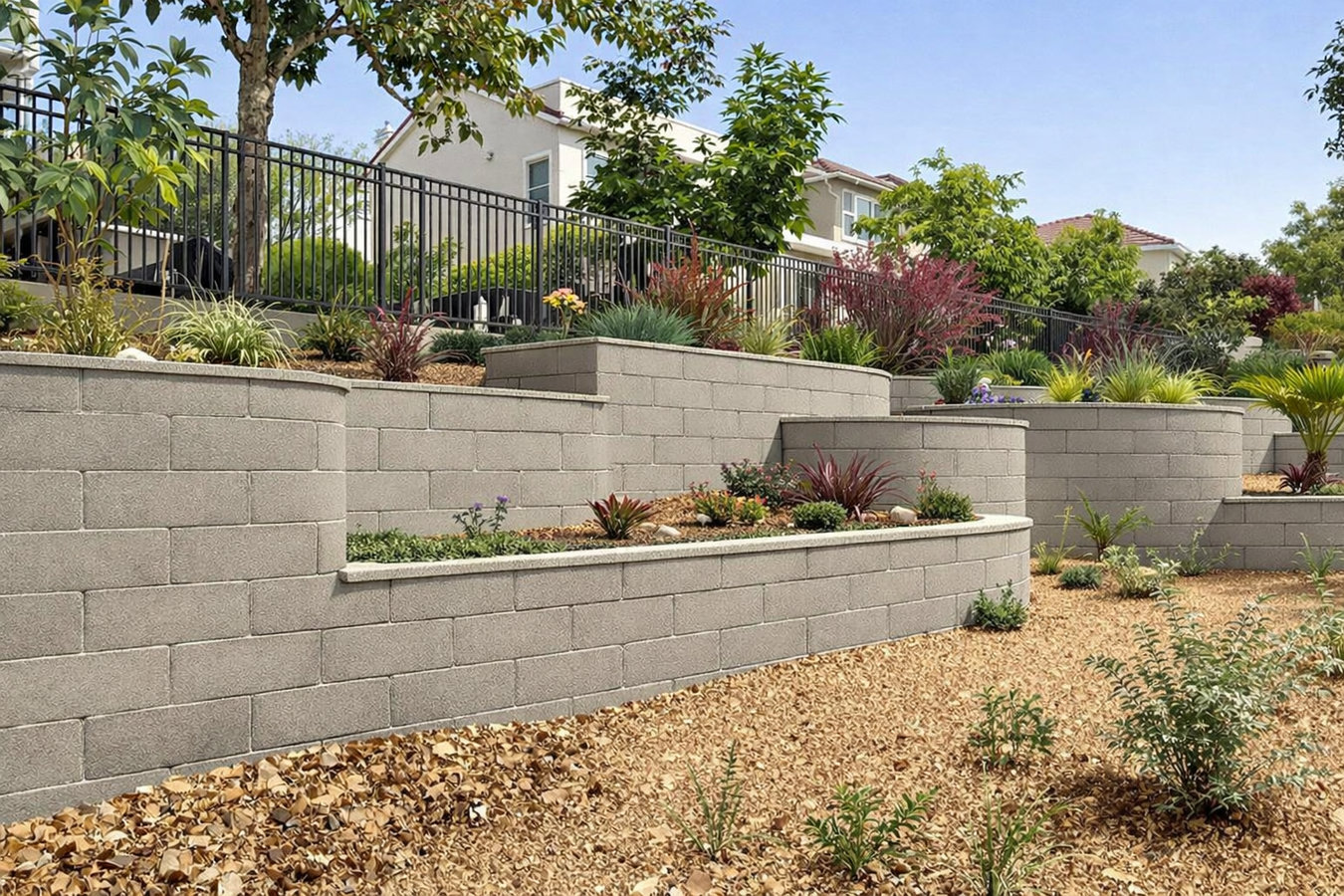
A slope that washes out or a wall that is leaning will only get worse through Springfield winters. We build poured concrete retaining walls with the footing depth and drainage that make them last.
Concrete retaining walls in Springfield hold back soil on slopes so it does not slide, erode, or push against your driveway or foundation. A straightforward residential wall, 20 to 40 feet long and 3 to 4 feet tall, typically takes a crew two to four days from start to finish. Precision Springfield Concrete Company handles permits, excavation, drainage installation, the pour, and the city inspection on every job.
A lot of Springfield homeowners are dealing with slopes that have been eroding gradually for years. In older neighborhoods like Forest Park and East Forest Park, the original stone or brick walls that were holding those slopes back are now 70 to 100 years old and failing. A replacement poured concrete wall will outlast patched masonry by decades and will not need attention again for a generation. If the slope you are trying to control also needs a staircase to navigate a grade change, we can coordinate concrete steps construction as part of the same project.
Springfield gets around 47 inches of precipitation per year, and the city's clay-heavy glacial soils hold water instead of draining it quickly. That combination puts real pressure on any wall that lacks proper drainage behind it. Understanding those local conditions is what separates a wall that lasts from one that cracks within a few years.
A retaining wall that is tilting forward, even slightly, or shows horizontal cracks running across the face is under stress it can no longer handle. In Springfield's freeze-thaw climate, a wall that starts leaning in the fall almost always gets worse over winter as the ground shifts. This is not a cosmetic issue: a leaning wall can fail suddenly, sending soil onto a walkway, driveway, or neighboring property.
If you notice soil, mulch, or gravel collecting at the base of a slope after heavy rain, the hillside is eroding. Springfield's roughly 47 inches of annual precipitation will gradually strip an unprotected slope bare. A retaining wall stops that erosion by holding the soil in place and redirecting water safely away from the slope base.
If water collects against your home's foundation after a storm, a slope without proper grading or a retaining wall may be directing runoff toward the house instead of away from it. Over time that water pressure causes foundation cracks, basement leaks, and structural problems. A wall combined with proper grading can redirect runoff before it reaches your home.
Springfield has thousands of homes with original stone or brick retaining walls that are now 70 to 100 years old. If the mortar between stones is crumbling, individual stones are falling out, or the wall has a noticeable bow, it is past the point of patching. Replacing it before it fails completely is almost always less expensive and less disruptive than dealing with a collapse.
We build poured concrete retaining walls for residential properties throughout Springfield and the surrounding Pioneer Valley. Every project starts with an on-site assessment of the slope, soil type, and drainage conditions before we ever give you a number. We excavate to below the frost line, set the footing, install gravel backfill and a perforated drainage pipe behind the wall, form and pour the concrete, and handle the permit process from application through city inspection.
For homeowners who want to turn a newly stabilized slope into usable outdoor space, our concrete floor installation service can extend a project to include a finished patio or terrace surface behind the wall. And where a grade change needs a way to navigate it safely, we can add concrete steps construction as part of the same scope so you end up with a finished, functional space rather than just a wall.
The critical work happens behind the wall, not just in front of it. Gravel backfill and a drainage pipe carry water away so it does not build pressure against the concrete. A wall built in Springfield's clay-heavy soil without that drainage layer will fail faster than the same wall built in sandier ground elsewhere. Asking your contractor exactly what they plan to put behind the wall is the single best question you can ask before signing a contract.
For slopes, hillsides, or yard edges that have never had a wall and are actively eroding or directing water toward the house.
Best for properties with failing stone, brick, or older poured-concrete walls that are past the point of effective repair.
Suits steep grades where a single tall wall is not practical; a series of shorter stepped walls distributes soil pressure and creates usable level terraces.
We handle the permit application and coordinate the city inspection for all walls that require one, keeping you protected and the work on record.
Springfield sits in USDA Hardiness Zone 6a, and the ground regularly freezes to a depth of 48 inches or more during a typical western Massachusetts winter. Any retaining wall footing that does not go deep enough will be pushed up and down by the freezing and thawing ground each season until the wall cracks or leans. This is not a theoretical risk: it is the reason many of the stone and brick walls built in Springfield's older neighborhoods in the early 1900s are now failing. Poured concrete built to current frost-depth standards performs fundamentally differently than the original construction did.
The soil throughout much of Springfield is clay-rich glacial till, deposited thousands of years ago during the retreat of the last glaciation. Clay holds water instead of draining it. That means water pressure builds up behind a retaining wall faster here than it would in sandier soils, making drainage behind the wall especially critical. We work regularly in Holyoke, Agawam, and Ludlow, where the same soil conditions apply, and every wall we build in these communities gets the same gravel-and-pipe drainage system behind it.
Springfield's Building Department requires a permit for retaining walls that exceed four feet in height from the bottom of the footing to the top of the wall. Pulling that permit means a city inspector will verify the footing depth and drainage before the wall is backfilled. That inspection is genuine protection for you as a homeowner, not just a formality. We handle the application as a standard part of every qualifying project and coordinate the inspection so you do not have to manage the process yourself. You can learn more about retaining wall drainage and design standards from the Federal Highway Administration, which publishes useful guidance on what separates properly built walls from failure-prone ones.
We visit your property to assess the slope, soil, and drainage conditions before giving you a number. A phone quote for a retaining wall is rarely accurate; you will receive a written estimate within a few days of the visit with no obligation to move forward.
If your wall requires a permit, we file the application with Springfield's Building Department. Massachusetts law also requires a Dig Safe call before any excavation; we make that call and wait for utility lines to be marked before any digging begins.
We dig to below the 48-inch frost line to set the footing. This is the most disruptive day of the project. Once the footing cures, the wall form goes up, the concrete is poured, and gravel backfill with a perforated drain pipe is installed behind the wall before any soil is replaced.
After the pour, we clean up the work area and remove forms. If a permit was pulled, we coordinate the city inspection. The concrete is firm within a few days but reaches full strength over about four weeks; avoid heavy loads against the wall during that period.
Free on-site estimate. Written quote with no obligation. Permits handled for you.
(413) 334-1135Western Massachusetts frost depths reach 48 inches or more. We set every footing below that line so the freeze-thaw cycles that destroy under-built walls do not touch yours. That single step is what separates a 50-year wall from a 10-year one in this climate.
Springfield's clay-heavy soil holds water against walls and causes pressure failures. We install gravel backfill and a perforated drainage pipe behind every wall we build, as a standard step, not an add-on. This is the most commonly skipped part of a retaining wall job, and the main reason walls fail prematurely.
We handle the Building Department permit application and coordinate the city inspection for every wall that requires one. That independent inspection puts the work on record, which matters when you sell your home or file an insurance claim. You should not have to take a contractor's word that the job was done correctly.
We have built retaining walls in Forest Park, East Forest Park, the Hill neighborhoods, and the postwar streets of Sixteen Acres. Knowing which soils drain slowly, which slopes are steepest, and where the permit office requires specific documentation is the kind of local experience that only comes from working here consistently. The American Society of Concrete Contractors at ascconline.org publishes the standards our crews train to.
Every wall we build is priced based on what we actually see at your site, not a phone estimate. You can verify contractor licensing and registration through the Massachusetts Office of Consumer Affairs and Business Regulation before you sign anything. We carry the required state registrations and are glad to provide documentation on request.
Pair your retaining wall project with a new basement or garage slab to address multiple concrete surfaces in a single coordinated project.
Learn moreAdd concrete steps to navigate a grade change created by your new retaining wall and complete the finished look of the space.
Learn moreSpringfield's construction season fills fast in spring. Reach out now to lock in your project date before the schedule fills up.