Loading...
Serving Springfield, MA and surrounding areas. (413) 334-1135
Serving Springfield, MA and surrounding areas. (413) 334-1135
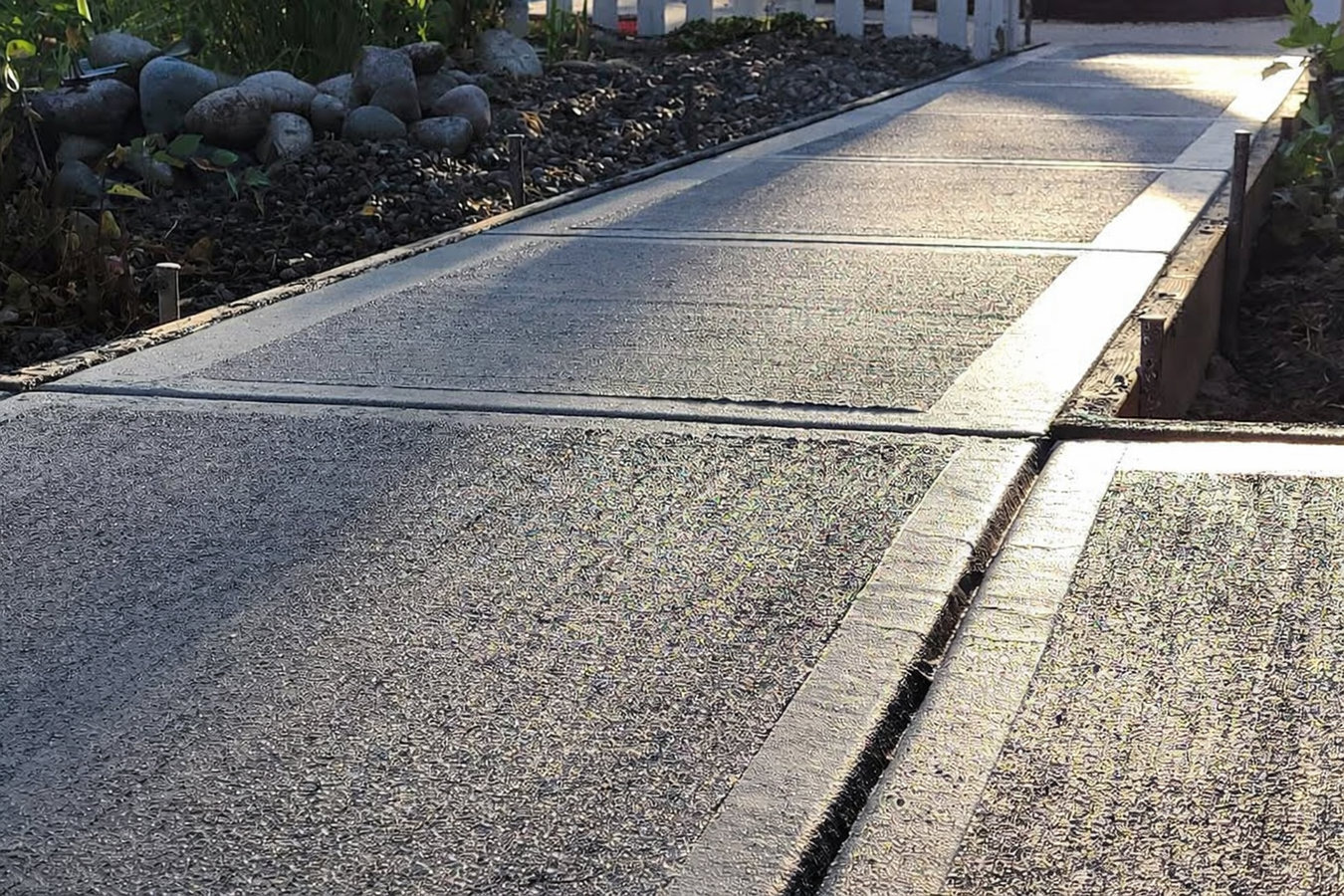
A cracked or lifted sidewalk is a trip hazard and your liability in Springfield. We build concrete sidewalks with the base depth and mix design that keep them level after years of freeze-thaw cycles.
Concrete sidewalk building in Springfield starts with proper base preparation, not just the pour, because the ground underneath determines whether the slab stays level five winters from now. Most residential projects take one to two days of active work, with the surface ready for foot traffic in 24 to 48 hours. Precision Springfield Concrete Company handles permits, base prep, the pour, and the final walkthrough from start to finish.
Springfield averages around 130 freeze-thaw cycles per year. That repeated ground movement is what pushes old slabs up, breaks them apart, and opens small cracks into wide ones. Homeowners in neighborhoods like Forest Park and McKnight, where much of the housing stock dates from before 1960, often find their walkways were originally poured without the base depth or joint spacing that modern work requires. A full replacement is usually the more cost-effective long-term choice compared to repeated patching on a slab that was never built correctly. If you are also planning a new concrete driveway alongside the sidewalk, we can coordinate both projects for a finished result that ties the whole front of the property together.
In Springfield, the sidewalk between your property line and the street is generally the homeowner's responsibility to maintain, even though it sits in the public right-of-way. That means a cracked or lifted section is your liability if someone trips. Understanding that responsibility is often what motivates homeowners to stop patching and commit to a proper replacement.
If one slab sits noticeably higher than the one next to it, or the whole walkway has shifted direction, the ground underneath has moved. In Springfield, this is often caused by freeze-thaw movement or tree roots from the large mature trees common in older neighborhoods. A height difference of more than half an inch is a trip hazard worth getting assessed.
Small surface cracks are normal aging, but a crack that runs from one edge of a slab to the other means the slab has broken through. In Springfield's climate, water enters those cracks, freezes, and forces them wider every winter. Once a crack reaches that stage, patching is usually a short-term fix at best.
If the top layer is peeling away in thin chips or developing a rough, pitted texture, that is called spalling. It is especially common on older Springfield sidewalks poured before modern mix formulas and now exposed to decades of road salt and freeze-thaw cycles. Spalling accelerates once the surface layer is compromised.
A properly built sidewalk sheds water to the sides. Puddles sitting on the surface after rain mean the slab has settled unevenly or was never graded correctly. Standing water accelerates freeze-thaw damage and can also direct water toward your foundation, which is a real concern on Springfield's older homes where foundation drainage is already marginal.
We build new concrete sidewalks for residential properties throughout Springfield and the surrounding Pioneer Valley communities. That includes front walkways from the street to your front door, side paths from the driveway to a back entrance, and full perimeter sidewalk replacements on properties where the original concrete has failed across the board. Every project includes permit handling, full demolition and removal of old material, gravel base preparation to the correct depth, and a clean broom-finished pour with properly spaced control joints.
For homeowners who want to tie a front walkway project into a larger outdoor renovation, we also handle garage floor concrete so you can address multiple concrete surfaces in a single coordinated project. And for those who want a more decorative option for a front entry path, our concrete driveway building service can be extended or coordinated alongside the sidewalk for a finished front approach.
The key differentiator is base preparation. A four-inch concrete slab poured over two inches of uncompacted fill will not last ten years in Springfield. We excavate to the depth needed for local frost conditions and compact a gravel sub-base before a single yard of concrete is ordered. The visible work on pour day takes a few hours; the invisible work done the day before is what you are really paying for.
Best for properties with slabs that have cracked through, heaved significantly, or were poured decades ago without modern base or joint standards.
For properties that lack a front walk or need a path added to connect a driveway to a rear entrance or secondary door.
Suits homes where some slabs are in good condition and only the worst sections need to come out and be replaced to restore a safe, even surface.
We handle the permit application through Springfield's Inspectional Services Division for all projects that touch the public right-of-way, keeping you fully protected.
Springfield's freeze-thaw climate is one of the hardest tests a concrete sidewalk can face. The ground freezes and thaws repeatedly from late fall through early spring, pushing concrete slabs up, pulling them apart, and widening cracks that form even in well-built work. This means the quality of the gravel base and the mix design are not optional considerations here, they are what determines whether your sidewalk is still level in a decade. Clay-heavy soils in many parts of Springfield drain slowly and stay wet longer, which amplifies the freeze-thaw stress on any slab poured without a proper sub-base.
The older housing stock in neighborhoods like Forest Park and the Upper Hill also means many existing sidewalks were poured before modern base-depth and joint-spacing standards. Homeowners in Holyoke and Ludlow face the same conditions, and we work regularly in both communities. If the sidewalk on your street has been heaving for years, a replacement built to current depth and drainage standards will perform noticeably better than the original.
Springfield's permit process adds a step that some homeowners are not expecting. The city requires permits for most new sidewalk construction and full replacements, particularly when the work touches the public right-of-way. We handle the application through the city's Inspectional Services Division as part of every project. That step protects you, because it puts the work on record and means a city inspector has verified it meets local standards. Homeowners in Chicopee face similar permitting requirements for right-of-way adjacent work, and we manage that process there as well.
Contact us by phone or the estimate form on this page. We respond within 1 business day to ask a few basic questions about the project, gather photos or measurements if useful, and schedule a free on-site visit.
We visit your property, assess the ground conditions and site access, and provide a written estimate before any commitment. For most Springfield projects, we then submit the permit application to the city's Inspectional Services Division before scheduling the start date.
The crew removes old concrete, excavates to the correct depth for local frost conditions, and compacts a gravel sub-base. Once the forms are set, the concrete is poured, spread, finished, and control joints are cut. The pour itself usually takes a few hours.
The surface needs 24 to 48 hours before foot traffic. We walk the finished work with you, confirm the surface drains away from your home, and go over first-season care, including why you should avoid salt-based ice melt on fresh concrete heading into a Springfield winter.
We respond within 1 business day. There is no obligation attached to the estimate. After you submit, someone from our office will follow up to schedule a free on-site visit where we assess the ground conditions, confirm what the job involves, and give you a written price before you commit to anything.
(413) 334-1135Springfield's frost line reaches 3 to 4 feet, and clay-heavy soils throughout the city drain slowly. Every sidewalk we build gets a properly excavated and compacted gravel sub-base sized for local conditions. That is the work you cannot see, and it is the work that determines whether your sidewalk is still level in ten years.
We submit the permit application to Springfield's Inspectional Services Division for every project that requires one. You do not need to visit any city office or make a single phone call to the building department. This protects you from fines, keeps the project on record, and ensures a city inspector has verified the work.
We hold a Massachusetts Home Improvement Contractor (HIC) registration and carry general liability and workers compensation coverage. This is a legal requirement for residential work in Massachusetts, and it gives you access to the state's arbitration program if a dispute ever arises.
We have worked throughout Springfield and the surrounding area since 2022. That means we know the permit process at the city, the local soil conditions that cause sidewalk failures, and which neighborhoods have the oldest and most vulnerable existing concrete. The American Concrete Institute provides standards on cold-weather concrete practice that shape every pour we do.
A sidewalk built by someone who knows Springfield's climate, soils, and permit process will outperform one built by a contractor who treats this like any other region. The difference shows up on the third or fourth winter, not the first. See the American Concrete Institute for technical standards that guide our mix design and cold-weather placement practices. The City of Springfield Inspectional Services Division is where permits are issued for sidewalk work in the city.
Upgrade a cracked or bare garage floor with a properly finished concrete slab that can handle vehicle traffic and Springfield winters.
Learn moreExtend your project from the front walk to the full driveway for a finished, coordinated approach that adds real curb appeal.
Learn moreSpringfield's installation season is short and contractors book up fast, so getting on the schedule now avoids a months-long wait for the next available window.